FIRST ANNOUNCEMENT
The Association of LSP Teachers at Higher Education Institutions in Croatia
is pleased to announce its Call for Participation in the
8th INTERNATIONAL CONFERENCE
CONTEMPORARY CHALLENGES IN LSP TEACHING
11 – 13 February 2027, Dubrovnik, Croatia
VENUE
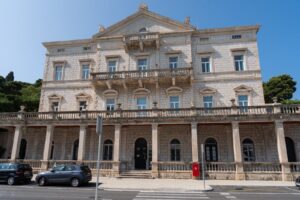
Faculty of Economics and Business, University of Dubrovnik
Lapadska obala Nojka Marinovića 7
20000 Dubrovnik, Croatia
ORGANISERS
Association of LSP Teachers at Higher Education Institutions
University of Dubrovnik
ORGANISING COMMITTEE
Brankica Bošnjak Terzić, Zagreb, Croatia
Sandra Didović Baranac, Dubrovnik, Croatia
Gorana Duplančić Rogošić, Split, Croatia
Drijenka Pandžić Kuliš, Zagreb, Croatia
Mirna Varga, Osijek, Croatia
PROGRAMME COMMITTEE
Sandra Didović Baranac, Croatia | Snježana Kereković, Croatia |
Saša Bjelobaba, Croatia | Joanna Kic-Drgas, Poland |
Ana Bocanegra-Valle, Spain | Aleksandra Łuczak, Poland |
Mirjana Borucinsky, Croatia | Sanja Marinov Vranješ, Croatia |
Brankica Bošnjak Terzić, Croatia | Daniela Matić, Croatia |
Dragana Božić Lenard, Croatia | Drijenka Pandžić Kuliš, Croatia |
Kiki Divini, Greece | Lola Perea Barbera, Spain |
Mateja Dostal, Slovenia | Željka Rosandić, Croatia |
Gorana Duplančić Rogošić, Croatia | Tamara Sladoljev-Agejev, Croatia |
Danijela Đorović, Serbia | Libor Štěpánek, Czechia |
Nataša Gajšt, Slovenia | Mirna Varga, Croatia |
Violeta Jurkovič, Slovenia | Polona Vičič, Slovenia |
Višnja Kabalin Borenić, Croatia | Dubravka Vilke-Pinter, Croatia |
Manuela Karlak, Croatia | Ana Vujović, Serbia |
KEYNOTE SPEAKERS
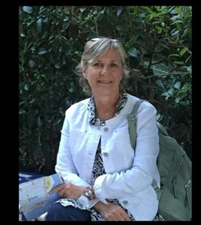 Snježana Kereković, Faculty of Mechanical Engineering and Naval Architecture, University of Zagreb, Croatia
Snježana Kereković graduated in English Language and Literature and German Language and Literature from the Faculty of Humanities and Social Sciences, University of Zagreb. She completed her PhD studies with a dissertation on multi-word lexical units in technical English and their equivalents in Croatian. For most of her teaching career, she was a technical and business English teacher at the Faculty of Mechanical Engineering and Naval Architecture, University of Zagreb. Her main fields of interest are specialised language teaching methodology, applied linguistics, terminology, and translation. She authored and co-authored several research and professional papers, case reports, and two technical English course books for students of mechanical engineering.
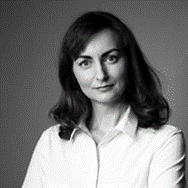 Joanna Kic-Drgas, Adam Mickiewicz University, Poznań, Poland
Joanna Kic-Drgas graduated in Applied Linguistics from Adam Mickiewicz University in Poznań. She received her PhD in Linguistics in 2012 and obtained the postdoctoral degree (dr hab.) in 2023. She specialises in Languages for Specific Purposes (LSP) at the Institute of Applied Linguistics, Faculty of Modern Languages and Literatures, Adam Mickiewicz University. Her research interests include LSP teaching, intercultural communication, and the integration of emerging technologies into foreign language education. In her monographs and research articles, she explores the development of communicative competence in professional settings, with particular emphasis on the linguistic and pragmatic demands placed on language users in workplace contexts. Profil: https://researchportal.amu.edu.pl/info/author/UAM190443/
 Aleksandra Łuczak, Kozminski University, Warsaw, Poland
Aleksandra Łuczak, PhD, is an experienced teacher of Legal English and Business English, course developer, and specialist in the application of artificial intelligence to language teaching, based in Poland. With more than twenty years of experience, she has established a strong reputation for helping legal professionals master legal English. At Kozminski University, she teaches TOLES (Test of Legal English Skills) preparation courses and provides one-to-one coaching for practising lawyers from a wide range of legal fields. Under her guidance, most participants achieve Gold Band results in the TOLES Advanced examination, reflecting the effectiveness of her learner-centred approach. She also integrates plain language principles into all of her courses. Passionate about combining technology with Legal English teaching, she enriches traditional TOLES materials with original interactive resources developed specifically for Legal English learners. Her online learning platform, pustulka.edu.pl, offers more than 2,500 microlearning activities at CEFR levels B1–C2, designed to develop vocabulary, grammar, and examination skills in an engaging and effective way. She is Director of the Language Centre at Kozminski University, where she also founded the PLAin Kozminski Lab, dedicated to promoting the use of plain language among students and staff.
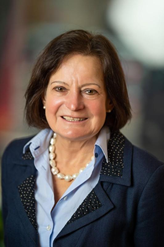 Ursula Wingate, King’s College London, United Kingdom
Ursula Wingate is Professor of Language Education in the School of Education, Communication and Society at King’s College London. Her research interests include theoretical and pedagogical models that underpin the development of students’ academic literacy. Drawing on her recent research project on perceptions of and practices related to generative artificial intelligence (GenAI) tools, she proposes pedagogical approaches that enable students to use GenAI ethically and effectively in their academic writing.
CALL FOR PRESENTERS
We welcome papers, workshops, and posters that provide theoretical and state-of-the-art insights into topics related to Languages for Specific Purposes (LSP), as well as contributions presenting practical examples and teaching experience, including research reports, case studies, project presentations, examples of good teaching practice, discussions, opinion papers, and other related topics.
CONFERENCE THEMES
- GENERAL ASPECTS OF LSP: genre analysis, discourse analysis, corpus analysis, needs analysis
- TERMINOLOGICAL CHALLENGES: theoretical aspects of terminology as a discipline, terminological theories and their application, terminology and lexicology, terminography and lexicography, psycholinguistics and terminology acquisition, cognitive aspects of LSP teaching, conceptualisation and lexicalisation in LSP teaching and learning, acquisition of LSP terminology, machine translation and AI-assisted translation of specialised texts
- METHODOLOGICAL CHALLENGES IN LSP TEACHING: LSP teaching in tertiary education, online teaching/learning, digital technologies in LSP teaching, project-based learning in LSP, communicative approaches to LSP teaching, multimodal approaches to LSP teaching, teaching LSP to students with visual impairments, deaf and hard-of-hearing students, and students with dyslexia and dysgraphia, Content and Language Integrated Learning (CLIL)
- LSP SYLLABUS DEVELOPMENT AND TEACHING MATERIALS: methodologies for developing LSP teaching materials, evaluation of LSP teaching materials, LSP syllabus design, adapting syllabi and teaching materials for online learning, development of digital and multimedia teaching materials
- ASSESSMENT AND EVALUATION IN LSP: testing, assessment and evaluation in LSP (face-to-face and online)
- ENGLISH AS A LINGUA FRANCA: internationalisation of higher education and LSP, English as a medium of instruction (EMI), English as a global language of science from the perspective of non-native English speakers
- PROFESSIONAL DEVELOPMENT OF LSP TEACHERS: development of LSP teacher competencies, research opportunities in LSP, collaboration among LSP teachers and institutional support, collaboration between language teachers and subject specialists, international collaboration and mobility of LSP teachers
- LSP AND ITS ENVIRONMENT: sociological and cultural aspects of LSP, interdisciplinary perspectives: the synergy between language and disciplinary knowledge
- ARTIFICIAL INTELLIGENCE IN THE ACADEMIC ENVIRONMENT: the use of AI in LSP teaching and research, ethical aspects of using AI tools in LSP
- OTHER TOPICS RELATED TO LSP
Conference languages (abstracts, oral presentations, workshops, and posters): Croatian, English, German, Italian and French. Oral presentations are 20 minutes long, followed by 5 minutes for questions and discussion. Workshops are 45 minutes long. |
ABSTRACT GUIDELINES (FOR ORAL PRESENTATIONS, WORKSHOPS AND POSTERS)
Abstract evaluation criteria
All submitted abstracts undergo double–blind peer review.
Abstracts will be evaluated according to the following criteria:
- originality of the topic and its relevance to the conference;
- consistency between the title and the content;
- clarity and organisation of the text;
- theoretical or contextual grounding.
Submitted abstracts should be submitted without a reference list or bibliography.
Abstracts should be between 250 and 300 words in length and must be proofread for language and spelling.
Each abstract must include five keywords or key phrases, listed alphabetically and separated by commas.
The Programme Committee reserves the right to reject submissions that fall outside the scope of the conference.
Abstracts for oral presentations, workshops, and posters should be submitted via the CONFERENCE REGISTRATION FORM. |
POSTER GUIDELINES
Title and content
- The poster title must be identical to the title of the accepted abstract.
- The poster should include the title of the accepted abstract, keywords and a brief abstract. It should clearly present the topic, objectives, theoretical background or context, methodology (where applicable), main findings or practical implications, and conclusions.
- The text should be proofread for language and spelling.
Author information
- Include the names of all authors and their affiliations.
- Providing a contact email address is recommended.
Size and orientation
- Poster format: B1 (707 × 1000 mm)
- Orientation: portrait
Design
- Use a clear, legible font that can be read comfortably from a distance of at least one metre.
- Use images, charts, and tables sparingly to enhance readability and visual appeal.
BOOK OF ABSTRACTS
After the anonymous peer-review process, accepted abstracts will be published in an online Book of Abstracts, which will be available on the Association’s website.
PUBLICATION OF CONFERENCE PAPERS IN PROCEEDINGS
Following the conference, presenters will be invited to submit full papers for publication in the conference proceedings, which will be published in open access on the Association’s website. All submitted papers are subject to editorial review and peer review in accordance with the Guidelines for Authors. The Editorial Board reserves the right to reject papers that fall outside the scope of the proceedings or fail to meet the required quality standards.
IMPORTANT DATES
- Abstract submission: 7 July 2026 – 1 October 2026
- Notification of acceptance: 1 November 2026
- Conference programme and Book of Abstracts published: 4 February 2027
- Submission of full papers for the conference proceedings: 1 June 2027
REGISTRATION FEES
Early registration 1 November – 30 November 2026
Regular registration 1 December 2026 – 11 January 2027
Students Undergraduate and graduate students: €20 |
 Association members: €120
The registration fee includes: conference materials, refreshments during coffee breaks, the conference dinner on the second day (drinks not included), one lunch, a guided tour of Dubrovnik, and a certificate of participation.
Accommodation and travel costs are not included in the registration fee.
IMPORTANT INFORMATION FOR PARTICIPANTS
Registration fees are charged per participant, regardless of the number of papers or presentations.
Certificates of participation are issued only to participants who attend the conference in person.
Certificates of presentation are issued only to authors who personally present their work at the conference.
For co-authored papers, certificates of presentation are issued only to those authors who take part in the presentation.
To register, please complete the CONFERENCE REGISTRATION FORM. |
PAYMENT INFORMATION
Payment method: Bank transfer only (the account of the Association)
Conference registration fee
Account holder | UNJSVU |
Bank name | Zagrebačka banka d.d. Zagreb |
Payment reference | Surname_conference2027 |
BIC (SWIFT) | ZABAHR2X |
IBAN | HR9323600001102959312 |
ATTENDEES are required to upload proof of payment when completing the CONFERENCE REGISTRATION FORM.
PRESENTERS are required to send proof of payment after receiving notification of acceptance to: lsp.teachers.conference@gmail.com
Cancellation Policy:
A 50% refund will be granted for cancellations received before 1 January 2027.
Unfortunately, no refunds can be made for cancellations received on or after that date.
Refund requests will be processed after the conference and should be sent to: lsp.teachers.conference@gmail.com
ACCOMMODATION INFORMATION
Dubrovnik offers a wide range of accommodation options to suit different budgets and preferences. Below are some recommendations and practical information to help you plan your stay.
Hotel accommodation
- Hotel Lero, Dubrovnik (Ul. Iva Vojnovića 14) – approximately 1.5 km from the Faculty of Economics and Business. A limited number of rooms are available to conference participants at special rates. The room rate includes breakfast. Tourist tax is charged in accordance with the applicable regulations. Participants wishing to take advantage of this offer should contact the hotel directly by 15 December 2026 at: booking@hotel-lero.hr (Reference: LSP TEACHING)
Other hotels:
- Akademis Academia, Ul. Marka Marojice 2b, 20000 Dubrovnik https://akademis.hr/en/ – approximately 1.1 km from the Faculty of Economics and Business.
- City Hotel, Hrvatskog crvenog Križa 4, 20000, Dubrovnik https://city-hotel.hr/ – approximately 750 m from the Faculty of Economics and Business.
- Hotel Kompas Dubrovnik, Ul. kardinala Stepinca 21, 20000 Dubrovnik https://www.adriaticluxuryhotels.com/hotel-kompas-dubrovnik?utm_source=google&utm_medium=organic&utm_campaign=Google-places – approximately 1.5 km from the Faculty of Economics and Business.
Private accommodation
Private accommodation is also widely available through online booking platforms.
GETTING TO DUBROVNIK
Dubrovnik is easily accessible by air, bus and car. Ruđer Bošković Airport (Dubrovnik Airport) is connected to the city centre by regular bus services and taxis.
By bus
Dubrovnik is connected by regular bus services to all major Croatian cities, including Zagreb, Split, Zadar, and Rijeka, as well as to several international destinations.
The main bus station is located near the Port of Gruž.
Bus timetables and ticket information are available on the websites of the bus operators and the Dubrovnik Bus Station: (https://autobusni-kolodvor-dubrovnik.com/)
By air
Ruđer Bošković Airport (Dubrovnik Airport) is located approximately 20 km from the city centre and offers regular and seasonal flights to numerous European destinations.
Transport from the airport to Dubrovnik is available by shuttle bus, taxi, ride-hailing services such as Uber, or pre-booked transfers.
Airport shuttle timetable (Airport → City): https://platanus.hr/dubrovnik-airport-shuttle/
Airport shuttle timetable (City → Airport): https://platanus.hr/dubrovnik-to-airport-shuttle-bus/
Distance from the nearest international airports
- Ruđer Bošković Airport (DBV), Dubrovnik – approximately 20 km from Dubrovnik city centre
- Saint Jerome – Split Airport (SPU) – approximately 240 km
- Mostar Airport (OMO), Bosnia and Herzegovina – approximately 145 km
- Tivat Airport (TIV), Montenegro – approximately 75 km
GETTING AROUND DUBROVNIK
Public transport
Public transport in Dubrovnik is operated by Libertas Dubrovnik. Bus routes connect all parts of the city, including the Old Town, Gruž, Lapad, and other neighbourhoods. Tickets can be purchased at Libertas sales offices, on board the bus, or at newsstands.
A single ticket purchased on board costs €2.50.
The city bus timetable is available at: https://www.libertasdubrovnik.hr/en/timetable/1/city-timetable
Bus route no. 6 operates between Pile (Old Town) and the Faculty of Economics and Business.
Taxis and ride-hailing services
Taxi services, as well as ride-hailing platforms such as Uber and Bolt, are readily available throughout Dubrovnik. Taxi ranks are located throughout the city, including at the airport, the main bus station, and near the Old Town.
Useful Links:
Dubrovnik Tourist Board: https://experiencedubrovnik.com/en/
Croatian National Tourist Board: https://croatia.hr/en-gb